2026 Guide to Dual Enrollment Programs: Earn College Credits

Dual enrollment programs empower high school students to simultaneously earn college credits, offering a significant advantage by reducing future educational costs and accelerating their academic journey towards higher education.
Are you a high school student or parent looking for ways to get ahead in college? The 2026 Guide to Dual Enrollment Programs: Earn College Credits While in High School offers an invaluable pathway, allowing ambitious students to jumpstart their higher education careers, save money, and experience college-level coursework early on.
Understanding Dual Enrollment Programs in 2026
Dual enrollment programs represent a strategic educational opportunity where high school students can take college-level courses and simultaneously earn credit for both their high school diploma and a future college degree. This innovative approach has gained significant traction, especially as educational landscapes evolve and the cost of higher education continues to rise. In 2026, these programs are more accessible and diverse than ever, offering a variety of formats and subject matters to suit different student needs and career aspirations.
The core concept of dual enrollment is straightforward: students attend college courses, either on a college campus, online, or even within their high school, taught by credentialed instructors. The credits earned are then recognized by both institutions, providing a seamless transition into higher education. This early exposure helps students adapt to college academics, understand expectations, and build confidence before full-time enrollment.
What Defines Dual Enrollment in Today’s Landscape?
Modern dual enrollment goes beyond just taking a single class. It encompasses a structured pathway designed to provide a comprehensive college experience. These programs are often a collaboration between local high schools and colleges, ensuring alignment with curriculum standards and student support.
- Course Variety: Students can choose from a wide range of subjects, including core academics, vocational training, and specialized fields.
- Flexible Formats: Options include in-person classes, synchronous and asynchronous online courses, and hybrid models.
- Accreditation: Credits are typically fully transferable to in-state public universities and often to private or out-of-state institutions.
In conclusion, dual enrollment programs in 2026 are robust and multifaceted, offering high school students a unique chance to gain a competitive edge. They are designed to integrate college-level learning into the high school experience, preparing students academically and financially for their post-secondary journeys.
The Unmatched Benefits of Earning College Credits Early
Participating in dual enrollment programs offers a multitude of advantages that can profoundly impact a student’s academic and financial future. Beyond simply accumulating credits, these programs provide a strategic head start, making the transition to college smoother and more cost-effective. Understanding these benefits is key to appreciating the true value of dual enrollment.
One of the most compelling benefits is the substantial financial savings. College tuition and fees continue to escalate, and by earning credits while still in high school, students can significantly reduce the overall cost of their bachelor’s degree. Many dual enrollment courses are offered at a reduced rate or even free of charge through partnerships between high schools and colleges, making higher education more attainable for families.
Financial Advantages and Academic Acceleration
The financial aspect is often a primary motivator for many families considering dual enrollment. By reducing the number of courses a student needs to take in college, they can potentially graduate earlier, saving on tuition, housing, and other associated costs.
- Reduced Tuition Costs: Fewer college-level courses needed in traditional college means less tuition paid later.
- Scholarship Opportunities: Early college success can make students more attractive candidates for scholarships.
- Accelerated Graduation: Earning credits early can lead to graduating college in three years instead of four, or even earlier.
Academically, dual enrollment challenges students with rigorous coursework, preparing them for the demands of university-level studies. This exposure helps develop essential skills such as critical thinking, time management, and independent study habits, which are crucial for success in higher education. It also allows students to explore potential majors and career paths without the pressure of full college tuition.
In essence, the benefits extend beyond just financial relief. They encompass a holistic preparation for college, fostering academic readiness, intellectual curiosity, and a significant boost in confidence. This early investment in education pays dividends for years to come, setting a strong foundation for future success.
Eligibility and Application Process for 2026 Dual Enrollment
Navigating the eligibility criteria and application process for dual enrollment programs can seem daunting, but with the right information, it’s a straightforward path. As of 2026, most programs prioritize academic readiness and a genuine interest in college-level work. Understanding these requirements and steps is crucial for a successful application.
Generally, eligibility for dual enrollment programs is determined by a combination of factors, including a student’s high school GPA, standardized test scores (if applicable), and recommendations from school counselors or teachers. Some programs may also require an essay or an interview to assess the student’s maturity and commitment to rigorous academic work. It’s important for students to work closely with their high school guidance counselor to identify appropriate programs and ensure they meet all prerequisites.
Key Requirements and Steps to Enroll
The specific requirements can vary between institutions and states, but a common set of guidelines applies across most programs. Students should prepare well in advance to ensure they have all necessary documentation and meet deadlines.
- Academic Standing: Typically, a minimum GPA (e.g., 2.5 or 3.0) is required, demonstrating a strong academic foundation.
- Standardized Tests: Some colleges may require SAT/ACT scores or placement tests (like Accuplacer) to determine college-level readiness in subjects like English and Math.
- Counselor Approval: High school counselor approval is almost always necessary to ensure the student can manage the increased workload.
The application process usually involves submitting an application to the college, providing official high school transcripts, and sometimes completing specific college forms. Students should also be aware of application deadlines, which can often be earlier than traditional college application dates. Early planning and proactive communication with both high school and college advisors are vital for a smooth process.
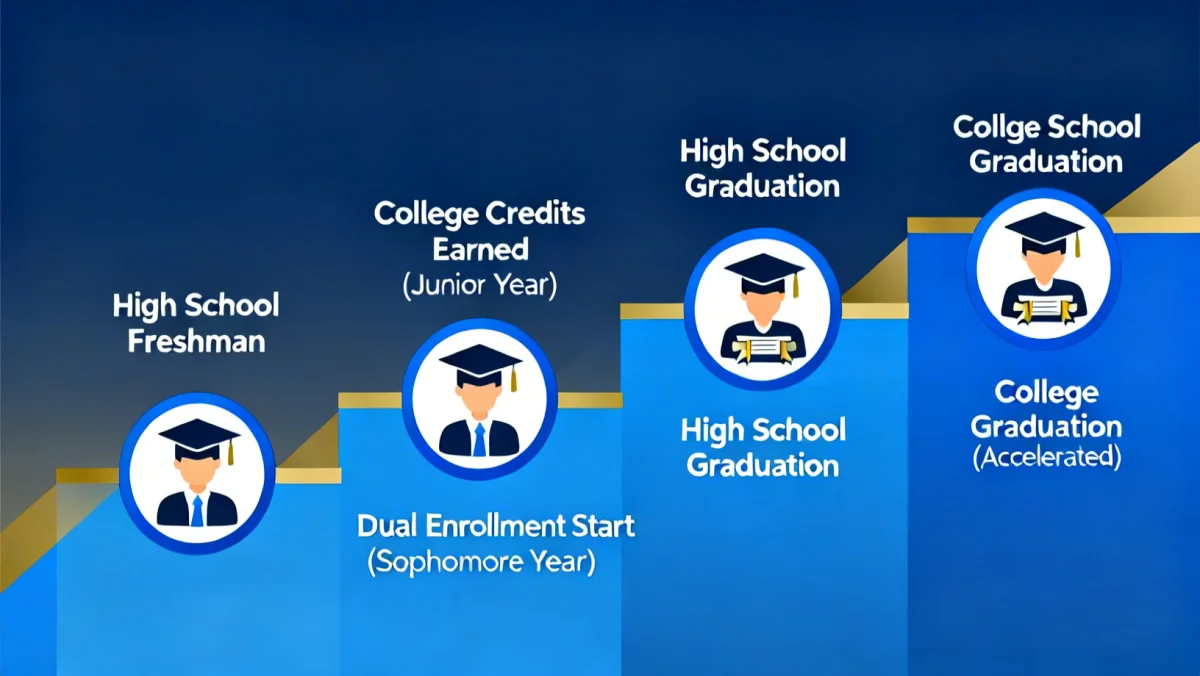
In conclusion, while eligibility and application procedures for dual enrollment programs require attention to detail, they are designed to ensure student success. By meeting the academic standards and following the application steps diligently, high school students can unlock this valuable educational opportunity.
Choosing the Right Dual Enrollment Program for You
Selecting the ideal dual enrollment program is a critical decision that can significantly influence a student’s academic journey and future success. With a growing number of options available in 2026, it’s essential to consider various factors, including academic interests, career goals, program structure, and credit transferability. A thoughtful approach ensures the chosen program aligns perfectly with individual aspirations.
Students should begin by evaluating their academic strengths and weaknesses, as well as their long-term educational and career objectives. For instance, a student passionate about engineering might look for programs offering advanced mathematics and physics, while another interested in healthcare might seek out biology or chemistry courses. The goal is to find courses that are not only challenging but also genuinely engaging and relevant to their future plans.
Factors to Consider for Optimal Program Selection
Beyond personal interests, practical considerations like course availability, format, and the reputation of the partnering institution play a significant role. It’s also crucial to understand how credits will transfer to other colleges or universities.
- Academic Alignment: Choose courses that complement your high school curriculum and future major.
- Credit Transferability: Verify that the college credits earned will be accepted by your prospective universities.
- Program Structure: Consider if an online, on-campus, or hybrid format best suits your learning style and schedule.
Another important aspect is the support system offered by the dual enrollment program. Does it provide academic advising, tutoring, or mentorship opportunities? These resources can be invaluable, especially for students new to college-level work. Students should also assess the workload and ensure they can balance dual enrollment courses with their high school responsibilities and extracurricular activities.
Ultimately, the right dual enrollment program is one that challenges the student appropriately, supports their academic growth, and provides a clear pathway toward their higher education goals. Thorough research and consultation with counselors and parents are indispensable in making this informed choice.
Maximizing Success in Dual Enrollment Courses
Enrolling in dual enrollment courses is only the first step; maximizing success within these rigorous programs requires strategic planning, effective study habits, and a proactive approach to learning. The transition to college-level academics can be challenging, but with the right strategies, students can excel and fully leverage the benefits of early college credit.
One of the most crucial elements for success is strong time management. Dual enrollment students are balancing high school coursework, potentially extracurricular activities, and college-level studies. Creating a detailed schedule, prioritizing tasks, and avoiding procrastination are essential. Students should allocate specific times for studying each subject and stick to their routine as much as possible.
Effective Strategies for Academic Achievement
Beyond time management, developing robust study habits and utilizing available resources can significantly enhance a student’s performance. College courses often demand more independent learning and critical thinking than high school classes.
- Active Participation: Engage in class discussions, ask questions, and contribute to group projects.
- Utilize Resources: Take advantage of tutoring services, professor office hours, and college writing centers.
- Effective Study Techniques: Practice active recall, spaced repetition, and understanding concepts rather than rote memorization.
Building a good relationship with professors is also vital. Attending office hours, seeking clarification on assignments, and demonstrating enthusiasm can lead to valuable mentorship and support. Additionally, understanding the syllabus thoroughly, including grading criteria and assignment deadlines, helps students stay organized and ahead of their work.
In conclusion, success in dual enrollment programs is a combination of discipline, strategic planning, and leveraging all available support. By adopting these practices, students can not only earn valuable college credits but also develop the academic maturity and self-reliance necessary for future educational endeavors.
The Future of Dual Enrollment: Trends and Outlook for 2026 and Beyond
The landscape of dual enrollment programs is continuously evolving, with significant trends shaping its future in 2026 and beyond. As educational institutions adapt to changing student needs and technological advancements, dual enrollment is poised to become an even more integral part of the high school experience, offering expanded opportunities and innovative learning models.
One prominent trend is the increasing integration of career and technical education (CTE) pathways within dual enrollment. This allows students to earn college credits in vocational fields, preparing them for immediate employment upon high school graduation or further specialized training. The emphasis is shifting towards providing practical skills alongside academic knowledge, catering to a broader range of student interests and economic demands.
Emerging Trends and Future Directions
Technology will continue to play a pivotal role, with online and hybrid learning models becoming more sophisticated and accessible. This expansion ensures that dual enrollment opportunities are not limited by geographical location or traditional classroom schedules.
- Increased Online Offerings: Greater flexibility and accessibility through advanced online platforms.
- CTE Integration: More programs blending academic credits with vocational training for diverse career paths.
- Early College High Schools: Growth in models where students spend their entire high school career earning an associate’s degree.
Furthermore, there’s a growing focus on equity and access, with initiatives aimed at making dual enrollment programs available to a more diverse student population, including those from underserved communities. This includes efforts to reduce financial barriers and provide comprehensive advising to ensure all eligible students can participate and succeed. The goal is to democratize access to higher education and provide every student with a head start.
In summary, the future of dual enrollment programs is bright, characterized by innovation, expanded access, and a commitment to preparing students for a dynamic future. These programs will continue to be a cornerstone of early college preparation, adapting to meet the evolving needs of students and the broader educational system.
| Key Aspect | Brief Description |
|---|---|
| Financial Savings | Significantly reduces overall college costs by earning credits at a lower or no cost. |
| Academic Head Start | Accelerates college graduation and provides early exposure to university-level rigor. |
| Eligibility & Application | Requires strong GPA, counselor approval, and adherence to specific college deadlines. |
| Future Trends | Growing integration of CTE, expanded online offerings, and increased focus on equity. |
Frequently Asked Questions About Dual Enrollment
Dual enrollment programs allow eligible high school students to enroll in college-level courses and earn both high school and college credit simultaneously. These courses can be taken at a college campus, online, or sometimes at the high school itself, taught by qualified instructors.
Eligibility typically depends on a student’s academic record, including GPA, maturity, and sometimes standardized test scores. Most programs require a minimum GPA, often around 2.5 or 3.0, and a recommendation from a high school counselor to ensure readiness for college-level work.
Credits earned through dual enrollment are generally transferable to in-state public universities and often to private or out-of-state institutions. However, it’s crucial for students to verify transferability with their prospective colleges before enrolling in specific courses to ensure acceptance.
The main financial benefit is significant savings on future college tuition costs. Many dual enrollment courses are offered at a reduced rate, or even free, through state or school district initiatives, allowing students to complete college faster and incur less debt.
Students should consider their academic interests, career goals, the program’s structure (online, in-person), credit transfer policies, and the level of academic support offered. Consulting with high school counselors and college advisors is highly recommended to make an informed decision.
Conclusion
The 2026 Guide to Dual Enrollment Programs: Earn College Credits While in High School illuminates a powerful educational strategy that offers profound advantages for ambitious students. By providing an early gateway to college-level academics, these programs not only alleviate the financial burden of higher education but also equip students with invaluable skills and experiences crucial for future success. As the educational landscape continues to evolve, dual enrollment remains a cornerstone for accelerating academic journeys, fostering intellectual growth, and building a solid foundation for lifelong learning. Embracing these opportunities can truly transform a student’s trajectory, preparing them for the challenges and opportunities of the 21st-century world.