US Treasury Bond Yields: 3-Month Forecast for Conservative Investors
Conservative investors can gain clarity on the near-term trajectory of US Treasury bond yields by understanding key economic indicators and Federal Reserve policy within a 3-month forecast.
For individuals prioritizing capital preservation and consistent income,
understanding US Treasury bond yields: a 3-month forecast for conservative investors
is not just beneficial, but essential. Navigating the complexities of the bond market requires a clear perspective on the forces at play, especially when seeking to protect and grow wealth prudently. This guide aims to demystify these dynamics, offering a focused outlook for the coming quarter.
The Basics of Treasury Bonds and Yields
US Treasury bonds are considered among the safest investments globally, backed by the full faith and credit of the U.S. government. Their stability makes them a cornerstone for conservative investment portfolios. Understanding how their yields are determined is the first step in making informed decisions.
A bond’s yield represents the return an investor receives on their investment. It’s inversely related to the bond’s price: when bond prices rise, yields fall, and vice versa. This dynamic is crucial for investors, as market sentiment and economic data constantly influence these prices.
What Drives Treasury Yields?
Several key factors contribute to the fluctuation of Treasury yields. These include macroeconomic data, inflation expectations, and, perhaps most significantly, the Federal Reserve’s monetary policy decisions.
- Economic Data: Strong economic growth often signals higher inflation, leading investors to demand higher yields to compensate for the eroded purchasing power of future returns. Conversely, weak economic data can suggest lower inflation and thus lower yields.
- Inflation Expectations: If investors anticipate inflation will rise, they will require higher yields to ensure their real returns are not diminished. The market’s perception of future inflation is a powerful driver.
- Federal Reserve Policy: The Fed’s actions, particularly adjustments to the federal funds rate, have a direct impact on short-term Treasury yields and ripple effects across the entire yield curve.
These intertwined elements create a complex but predictable dance in the bond market. For conservative investors, monitoring these drivers provides a foundational understanding of potential yield movements over the next three months.
Key Economic Indicators to Monitor
To effectively forecast US Treasury bond yields, conservative investors must pay close attention to a specific set of economic indicators. These metrics offer valuable insights into the health of the economy and potential shifts in monetary policy, directly impacting bond market dynamics.
These indicators provide a snapshot of the economic environment, allowing investors to anticipate how the Federal Reserve might react and, consequently, how bond yields might respond.
Inflation Data: CPI and PCE
Inflation remains a primary concern for bond investors. The Consumer Price Index (CPI) and the Personal Consumption Expenditures (PCE) price index are the most closely watched gauges.
- CPI (Consumer Price Index): Measures the average change over time in the prices paid by urban consumers for a market basket of consumer goods and services. A higher-than-expected CPI often leads to a rise in bond yields as investors demand greater compensation for inflation.
- PCE (Personal Consumption Expenditures): The Fed’s preferred inflation gauge, it tends to be broader and less volatile than CPI. Sustained increases in PCE could prompt the Fed to maintain or even raise interest rates, pushing yields higher.
Monitoring both headline and core (excluding volatile food and energy prices) readings of these indices is crucial. Persistent inflation signals often translate into upward pressure on bond yields, a key consideration for the next three months.
Employment Figures: Non-Farm Payrolls and Unemployment Rate
A robust labor market generally indicates a strong economy, which can contribute to inflationary pressures and influence Fed policy. Key employment data points include:
- Non-Farm Payrolls: This report measures the number of new jobs created each month, excluding farm workers and certain government employees. Strong job growth suggests economic expansion, potentially leading to higher yields.
- Unemployment Rate: A low unemployment rate often signals a tight labor market, which can drive wage growth and, subsequently, inflation. The Fed closely watches this for signs of economic overheating.
Unexpectedly strong employment reports can lead to higher bond yields as the market anticipates a more hawkish Fed stance. Conversely, signs of a weakening labor market might suggest the Fed could become more accommodative, potentially lowering yields.
GDP Growth and Manufacturing Surveys
Gross Domestic Product (GDP) provides a broad measure of economic activity, while manufacturing surveys offer a forward-looking perspective.
- GDP Growth: Strong GDP growth indicates a healthy economy, which can support higher interest rates and bond yields. Conversely, slowing growth might lead to lower yields as investors seek safety.
- ISM Manufacturing PMI: This index reflects the health of the manufacturing sector. Readings above 50 generally indicate expansion, while those below suggest contraction. A strong manufacturing sector can signal broader economic strength and potentially higher yields.
By tracking these indicators, conservative investors can develop a more nuanced understanding of the economic landscape and its likely impact on US Treasury bond yields over the short term. This forward-looking approach helps in positioning portfolios defensively.
The Federal Reserve’s Influence and Monetary Policy
The Federal Reserve is arguably the most significant single actor influencing US Treasury bond yields. Their monetary policy decisions, particularly regarding interest rates and quantitative easing or tightening, directly impact the cost of borrowing and the attractiveness of bonds.
Conservative investors must meticulously follow the Fed’s communications and actions, as these often foreshadow movements in the bond market. The central bank’s dual mandate of maximizing employment and maintaining price stability guides its policy decisions, which in turn shape the yield curve.

Federal Funds Rate and Quantitative Tightening
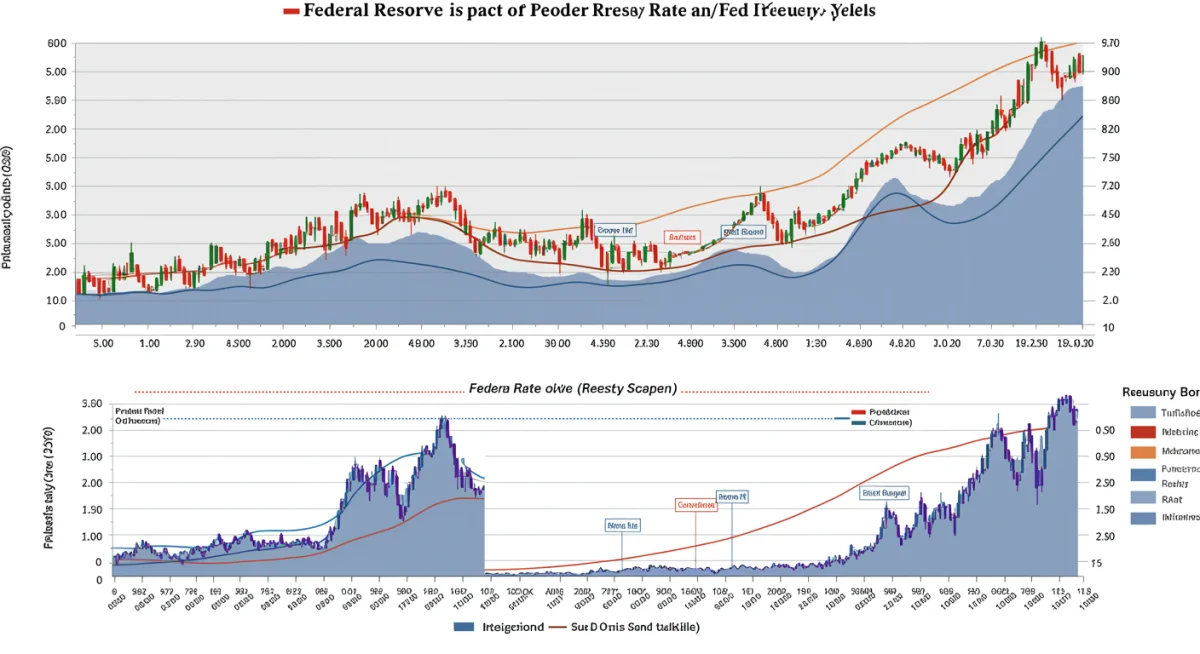
The federal funds rate is the benchmark interest rate that influences all other rates in the economy, including those on Treasury bonds. When the Fed raises this rate, it aims to cool inflation by making borrowing more expensive, which typically leads to higher bond yields.
Conversely, rate cuts are intended to stimulate economic activity, making borrowing cheaper and generally pushing bond yields lower. The market’s anticipation of these rate changes often moves yields even before the Fed officially acts.
- Rate Hikes: Indicate a tightening monetary policy, usually in response to strong economic growth or persistent inflation. This environment typically leads to higher short-term Treasury yields.
- Rate Cuts: Signal an easing of monetary policy, often enacted to stimulate a slowing economy or combat deflationary pressures. This can result in lower bond yields.
Beyond the federal funds rate, the Fed’s balance sheet policies, known as quantitative tightening (QT), also play a role. When the Fed allows its bond holdings to mature without reinvesting the proceeds, it effectively removes liquidity from the financial system, which can exert upward pressure on bond yields.
Forward Guidance and Market Expectations
The Fed also influences yields through its forward guidance – communications about its future policy intentions. This guidance helps shape market expectations, which are powerful drivers of bond prices and yields.
- Hawkish Stance: Suggests the Fed is leaning towards stricter monetary policy, indicating potential future rate hikes or continued QT. This tends to push yields higher.
- Dovish Stance: Implies a more accommodative policy, signaling potential rate cuts or a pause in tightening. This typically puts downward pressure on yields.
Market participants constantly analyze Fed speeches, meeting minutes, and economic projections (like the “dot plot”) for clues about future policy. Any divergence between market expectations and Fed guidance can cause significant volatility in Treasury yields. For conservative investors, aligning their understanding with the Fed’s projected path is crucial for anticipating yield movements over the next three months.
Global Economic Trends and Geopolitical Risks
While domestic factors are paramount, US Treasury bond yields are not immune to the broader global economic landscape and geopolitical developments. These external forces can significantly influence investor sentiment, demand for safe-haven assets, and, consequently, bond yields.
Conservative investors must broaden their purview beyond national borders to fully appreciate the complex interplay of factors driving yield movements. Global trends can either amplify or counteract domestic influences, making a holistic perspective essential for a sound 3-month forecast.
International Economic Growth and Trade
The economic performance of major global economies, such as China and the Eurozone, can have a notable impact on US yields. Strong global growth often implies increased demand for goods and services, potentially leading to higher inflation worldwide.
- Strong Global Growth: Can lead to higher demand for riskier assets, potentially reducing demand for safe-haven Treasuries and pushing their yields up. It can also fuel global inflation.
- Weak Global Growth: Might increase demand for US Treasuries as investors seek safety, driving down yields. It can also signal lower global inflationary pressures.
Trade relations and policies between major economic blocs also play a role. Trade tensions can disrupt supply chains, impact corporate earnings, and create economic uncertainty, often prompting a flight to safety that lowers Treasury yields.
Geopolitical Events and Safe-Haven Demand
Uncertainty stemming from geopolitical events frequently triggers a “flight to quality” phenomenon, where investors move capital into traditionally safe assets like US Treasuries, regardless of their current yield.
- Escalating Conflicts: Regional conflicts or international disputes can increase global risk aversion, boosting demand for Treasuries and driving their yields lower.
- Political Instability: Unforeseen political developments in key regions can also spur safe-haven buying, impacting US bond yields.
- Commodity Price Shocks: Events affecting global oil or food supplies can lead to inflationary spikes or economic slowdowns, directly influencing bond market expectations.
These events are inherently unpredictable, but their potential impact on US Treasury bond yields is undeniable. For conservative investors, understanding how such external factors can quickly alter market dynamics is vital. While a precise forecast of geopolitical events is impossible, recognizing their potential to shift yield trajectories is a critical component of a robust investment strategy over the next three months.
Analyzing the Current Yield Curve
The yield curve is a fundamental tool for conservative investors seeking to understand the present state and future expectations of the bond market. It plots the yields of Treasury bonds with equal credit quality but differing maturity dates, from short-term bills to long-term bonds.
The shape of the yield curve offers profound insights into market sentiment, economic forecasts, and the potential trajectory of interest rates. By analyzing its current configuration, investors can glean valuable information for their 3-month outlook on Treasury bond yields.
Normal, Flat, and Inverted Yield Curves
The yield curve typically takes one of three general shapes, each carrying distinct implications:
- Normal Yield Curve: This is the most common shape, where longer-term bonds have higher yields than shorter-term ones. It reflects expectations of economic growth and some inflation, as investors demand higher compensation for tying up their money for longer periods.
- Flat Yield Curve: Occurs when there is little difference between short-term and long-term yields. This can signal economic uncertainty or a transition period, where the market is unsure about the future direction of interest rates.
- Inverted Yield Curve: A rare but significant phenomenon where short-term yields are higher than long-term yields. Historically, an inverted yield curve has often preceded economic recessions, as it suggests investors anticipate future economic weakness and lower interest rates.
The specific inversion of the 2-year and 10-year Treasury yields is particularly watched, as it has been a reliable, though not infallible, recession indicator. Conservative investors should pay close attention to this relationship.
Implications for the Next 3 Months
The current shape of the yield curve provides critical clues for the near-term future of US Treasury bond yields. For instance, if the curve remains inverted, it suggests the market is still pricing in a potential economic slowdown or recession, which could lead to the Fed cutting rates in the future, eventually pushing yields lower.
Conversely, if the curve begins to steepen (short-term yields fall relative to long-term yields, or long-term yields rise more rapidly), it could indicate a more optimistic economic outlook or renewed inflation concerns. This would suggest potential upward pressure on yields across the board.
Monitoring changes in the curve’s slope – whether it’s steepening, flattening, or inverting further – can offer early warnings or confirmations of shifts in market expectations. For conservative investors, understanding these subtle movements is key to anticipating how bond yields might behave over the coming quarter and adjusting portfolio allocations accordingly to mitigate risk or capture opportunities.
3-Month Forecast for Conservative Investors
Synthesizing the various factors we’ve discussed – economic indicators, Federal Reserve policy, global trends, and the yield curve’s shape – allows us to construct a plausible 3-month forecast for US Treasury bond yields specifically tailored for conservative investors.
This outlook aims to provide a balanced perspective, acknowledging both the potential for stability and the risks of volatility, enabling prudent decision-making in the near future. Conservative investors prioritize capital preservation and predictable income, making a clear forecast invaluable.
Potential Scenarios for Yield Movements
Over the next three months, several scenarios could unfold for US Treasury bond yields:
- Base Case (Moderate Volatility): If inflation continues its slow descent towards the Fed’s target, and economic growth remains modest but resilient, we might see yields stabilize or even decline slightly. The Fed could hold rates steady, leading to a relatively flat yield curve.
- Higher Yields (Inflationary Pressure): Should inflation prove more persistent than expected, or if economic activity accelerates unexpectedly, the Fed might signal further rate hikes or a prolonged period of higher rates. This would likely push both short and long-term yields higher.
- Lower Yields (Economic Slowdown/Recession): If economic data points to a significant slowdown or an impending recession, investors would likely flock to the safety of Treasuries, driving yields lower. The Fed might also be forced to cut rates, reinforcing this downward trend.
The interplay of these factors means that while a specific prediction is challenging, understanding the conditions that lead to each scenario is vital for preparedness. The market’s reaction to incoming data will be swift, so staying informed is paramount.
Strategies for Conservative Portfolios
Given these potential scenarios, conservative investors can adopt several strategies to manage their US Treasury bond holdings effectively over the next three months:
- Focus on Shorter-Duration Bonds: In an environment of potential yield volatility, shorter-duration Treasuries (e.g., 1-year or 2-year notes) are less sensitive to interest rate changes. This reduces interest rate risk.
- Laddering Strategy: Invest in bonds with staggered maturities. As shorter-term bonds mature, the proceeds can be reinvested at prevailing rates, providing flexibility and potentially higher yields if rates rise.
- Diversification: While Treasuries are safe, consider diversifying within the fixed-income space with high-quality corporate bonds or municipal bonds, provided they align with your risk tolerance and investment objectives.
- Monitor Fed Communications: Closely follow FOMC meeting minutes, speeches by Fed officials, and economic projections. These are key for anticipating policy shifts that will impact yields.
For conservative investors, the goal is not to maximize returns at all costs, but to preserve capital and generate predictable income with minimal risk. By understanding the forces shaping US Treasury bond yields and employing these strategic approaches, investors can confidently navigate the market over the coming quarter, making informed decisions that align with their financial goals.
Risks and Opportunities for Conservative Investors
Even for conservative investors focused on US Treasury bonds, the market is not without its risks and, importantly, its opportunities. A comprehensive understanding of these elements is crucial for navigating the next three months effectively, ensuring that portfolio decisions are both prudent and strategically advantageous.
While Treasuries are synonymous with safety, specific market conditions can still impact their performance. Recognizing these nuances allows for a more resilient investment approach, balancing capital preservation with potential for modest growth.
Primary Risks to Consider
For conservative investors, the main risks associated with US Treasury bonds typically revolve around interest rate fluctuations and inflation:
- Interest Rate Risk: This is the most significant risk for bondholders. If interest rates rise after you’ve purchased a bond, the market value of your existing bond will fall. While you still receive your fixed coupon payments, selling the bond before maturity would result in a capital loss. This risk is higher for longer-duration bonds.
- Inflation Risk: Even if your bond provides a steady nominal return, persistent high inflation can erode the purchasing power of those returns. The real return (nominal return minus inflation) could be lower than expected, or even negative.
- Reinvestment Risk: If interest rates fall, the income generated from maturing bonds or coupon payments will be reinvested at lower yields. This can reduce the overall return on your portfolio over time, especially for investors reliant on bond income.
While credit risk is minimal for US Treasuries, these other risks necessitate careful consideration, particularly in a dynamic economic environment. Understanding how these risks might manifest over a 3-month horizon helps in risk mitigation.
Opportunities in a Changing Yield Environment
Despite the risks, a fluctuating yield environment also presents unique opportunities for conservative investors:
- Higher Reinvestment Yields: If rates rise, investors with maturing bonds or new capital can reinvest at higher yields, locking in better income streams for the future. This is a significant advantage for those with a laddering strategy.
- Short-Term Opportunities: In periods of yield curve inversion or high short-term rates, shorter-duration Treasuries can offer attractive yields with minimal interest rate risk, providing a safe haven for cash equivalents.
- Active Management: For those willing to be more active, tactical adjustments to bond duration based on short-term forecasts can help optimize returns. For instance, extending duration when yields are expected to fall, or shortening it when they are expected to rise.
Conservative investing in US Treasury bonds is not merely about avoiding risk; it’s also about intelligently positioning a portfolio to capture opportunities while adhering to a strict risk management framework. By carefully weighing the risks against the potential benefits, investors can make prudent decisions that align with their financial objectives over the next three months.
| Key Factor | 3-Month Outlook Impact |
|---|---|
| Inflation Trends | Persistent inflation could lead to stable or slightly higher yields; easing inflation could see yields fall. |
| Federal Reserve Policy | Fed’s rate decisions and forward guidance will heavily influence short-term yield direction. |
| Economic Growth | Strong growth might push yields up; slowdowns could drive safe-haven demand, lowering yields. |
| Geopolitical Events | Increased global uncertainty often leads to a flight to safety, decreasing Treasury yields. |
Frequently Asked Questions About Treasury Yields
The primary driver of short-term Treasury bond yields is the Federal Reserve’s monetary policy, specifically the federal funds rate. Changes in this benchmark rate directly influence the cost of short-term borrowing and the attractiveness of short-dated government debt.
Inflation generally has an inverse relationship with bond prices and a direct relationship with yields. When inflation expectations rise, investors demand higher yields to compensate for the anticipated erosion of their future returns’ purchasing power, thus pushing yields up.
The yield curve is a crucial indicator because its shape (normal, flat, or inverted) signals market expectations about future economic growth and interest rates. An inverted curve, for instance, has historically preceded economic recessions, offering a warning sign for investors.
While US Treasury bonds are considered free of credit risk, meaning the government is highly unlikely to default, they are not entirely risk-free. They are still subject to interest rate risk, where their market value can fluctuate with changes in prevailing interest rates.
If yields are expected to rise, conservative investors might consider focusing on shorter-duration bonds, as they are less sensitive to interest rate changes. A laddering strategy, where bonds mature at staggered intervals, also allows for reinvestment at potentially higher rates.
Conclusion
For conservative investors, understanding US Treasury bond yields: a 3-month forecast for conservative investors is a continuous and dynamic process. The interplay of domestic economic indicators, the Federal Reserve’s precise monetary policy, global economic shifts, and the nuanced shape of the yield curve all contribute to the near-term trajectory of these vital investment vehicles. By meticulously monitoring these factors and adopting prudent strategies such as focusing on shorter durations or employing a laddering approach, investors can effectively navigate the evolving bond market. While no forecast is infallible, an informed perspective empowers conservative investors to preserve capital, generate stable income, and seize opportunities in a measured and disciplined manner over the coming quarter.

