NASA’s Next 5 Years: Ambitious Space Exploration Plans & Budget
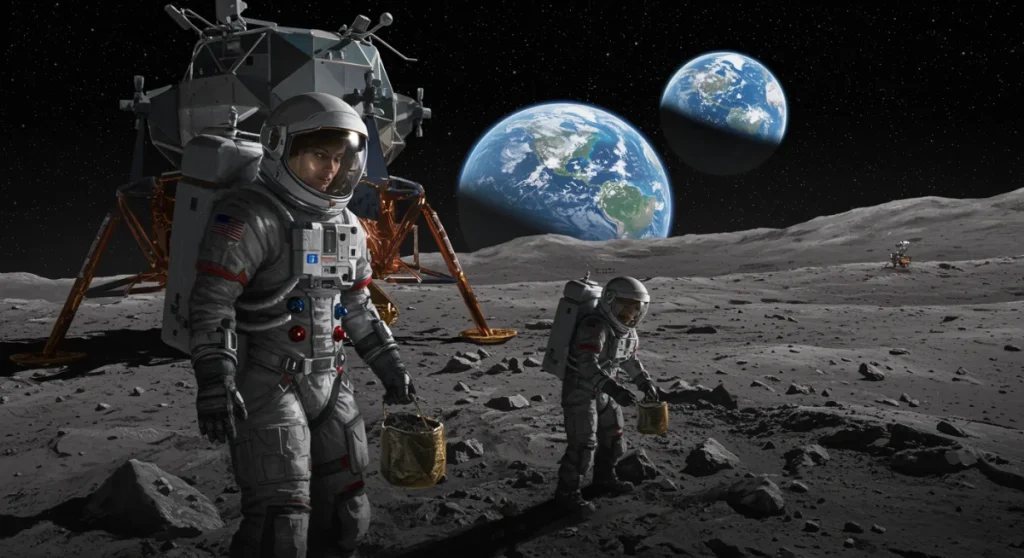
NASA has recently announced its comprehensive five-year strategic plan, detailing significant budgetary allocations and ambitious mission objectives focused on advancing lunar exploration, Mars colonization preparations, and deep space scientific discovery.
The cosmos beckons, and humanity’s response is taking shape with unprecedented clarity. The announcement of NASA Space Exploration Plans and budget for the next five years marks a pivotal moment, outlining an ambitious roadmap that promises to redefine our understanding of the universe and our place within it. This forward-looking strategy not only details groundbreaking missions but also reflects a steadfast commitment to scientific discovery, technological innovation, and expanding human presence beyond Earth.
Artemis Program: Returning Humanity to the Moon
The Artemis program stands as the cornerstone of NASA’s immediate future, aiming to return humans to the Moon, establish a sustainable presence, and prepare for future missions to Mars. This multi-phase initiative represents a significant leap forward from the Apollo era, focusing on long-term habitation and resource utilization. The next five years will be critical for developing and testing the technologies and procedures necessary to achieve these ambitious goals, setting the stage for a new era of lunar exploration.
NASA’s budget allocation for Artemis underscores the program’s priority, funding the development of the Space Launch System (SLS) rocket, Orion spacecraft, human landing systems, and the Gateway lunar outpost. These elements are integral to providing the infrastructure needed for sustained lunar operations. The agency is also fostering international and commercial partnerships to accelerate progress and share the immense challenges and rewards of lunar exploration.
Key Artemis Milestones
- Artemis II Mission: A crewed flight test around the Moon, proving the Orion spacecraft’s capabilities with astronauts aboard.
- Artemis III Mission: The historic return of humans to the lunar surface, including the first woman and person of color.
- Gateway Lunar Outpost: Assembly and deployment of initial modules for a space station orbiting the Moon, serving as a staging point for lunar and deep-space missions.
The program is not merely about planting flags; it’s about building a foundation for future endeavors. The experiences gained and technologies developed through Artemis will be invaluable as NASA looks further into the solar system. The Moon will serve as a proving ground, allowing engineers and astronauts to refine techniques for living and working in a hostile environment, directly applicable to future Mars missions. This strategic approach ensures that every step taken on the Moon brings us closer to the Red Planet.
Advancing Mars Exploration and Human Landings
Beyond the Moon, Mars remains a primary target for NASA’s long-term human exploration goals. The next five years will see continued robotic exploration and significant investments in technologies that will enable human missions to Mars in the 2030s. This includes developing advanced propulsion systems, life support capabilities, and radiation shielding necessary for the arduous journey and extended stays on the Martian surface. The data gathered by current and future robotic missions is vital for understanding the Martian environment and mitigating risks for human explorers.
Current missions like Perseverance continue to gather crucial data, searching for signs of ancient microbial life and collecting samples for eventual return to Earth. These efforts are directly contributing to our knowledge base, informing future human mission architectures. The budget reflects a sustained commitment to these robotic pathfinders, recognizing their indispensable role in paving the way for human boots on Mars.
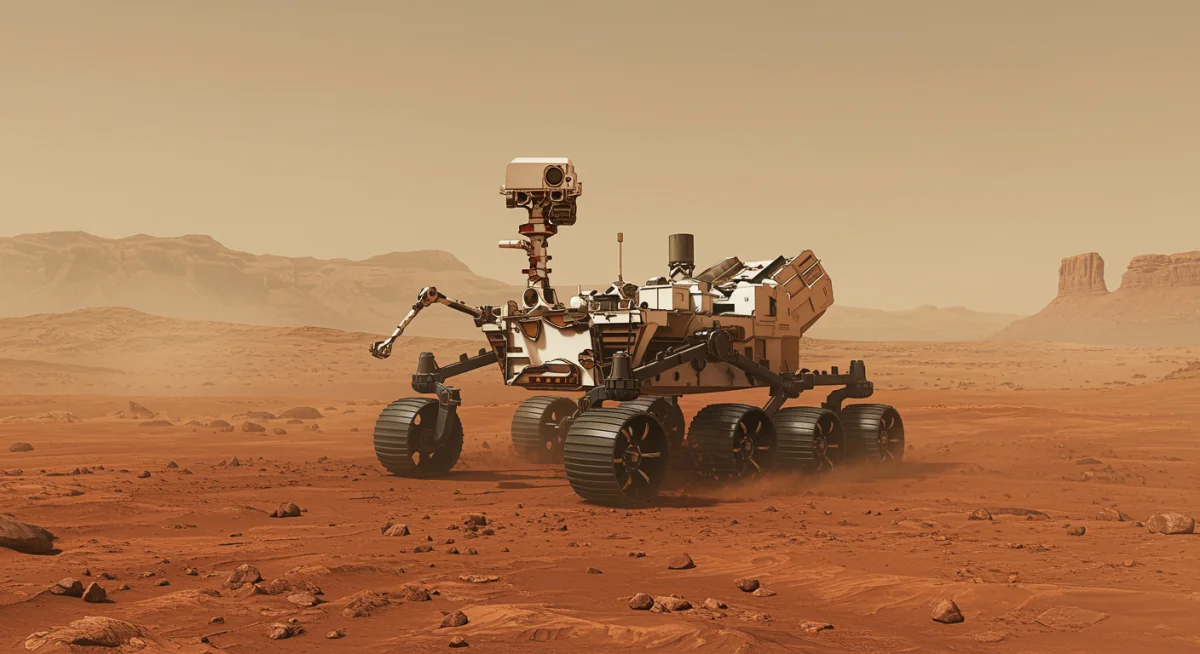
Preparing for human landings on Mars involves a multi-faceted approach, encompassing not only technological advancements but also rigorous scientific research into human physiology in deep space. The psychological and physical challenges of a multi-year mission are immense, requiring innovative solutions and comprehensive planning. NASA is actively collaborating with international partners and commercial entities to pool resources and expertise, accelerating the pace of development.
Critical Mars Technologies
- Mars Sample Return: A joint mission with ESA to bring samples collected by Perseverance back to Earth for in-depth analysis.
- Advanced Propulsion: Research and development into technologies like nuclear thermal propulsion to reduce transit times to Mars.
- In-Situ Resource Utilization (ISRU): Experiments to demonstrate the ability to live off the land on Mars, producing oxygen and fuel from local resources.
The strategic planning for Mars involves meticulous attention to detail, from mission architecture to crew selection and training. Every robotic mission success brings us closer to answering fundamental questions about life beyond Earth and preparing for the ultimate human journey to another planet. The next five years will solidify the groundwork for this monumental undertaking, transforming science fiction into a tangible future.
Deep Space Scientific Discovery and Observatories
While human exploration captures headlines, NASA’s commitment to deep space scientific discovery remains unwavering. The budget allocates substantial funds to operate and develop cutting-edge observatories and probes that push the boundaries of our knowledge about the universe. From studying exoplanets and black holes to understanding the origins of the cosmos, these missions provide invaluable insights that complement human exploration efforts. The James Webb Space Telescope (JWST) continues to deliver breathtaking images and data, revolutionizing astrophysics and cosmology.
Future missions include next-generation telescopes designed to detect biosignatures on exoplanets and missions to explore distant icy moons in our own solar system, which may harbor subsurface oceans and potential for life. These scientific endeavors are not just about discovery; they inspire the next generation of scientists and engineers, fostering a culture of innovation and curiosity. The data collected by these observatories influences our understanding of planetary formation, stellar evolution, and the fundamental laws of physics.
The scientific portfolio extends beyond astronomy to include heliophysics, studying the Sun and its influence on Earth and the solar system, and Earth science, monitoring our home planet’s climate and environment from space. These diverse areas of research are interconnected, providing a holistic view of the cosmos and our place within it. Funding ensures the longevity of existing missions and the initiation of new, ambitious projects.
Upcoming Scientific Missions
- Nancy Grace Roman Space Telescope: Designed to investigate dark energy, dark matter, and exoplanets.
- Europa Clipper: A mission to explore Jupiter’s moon Europa, assessing its potential for life.
- Dragonfly: A rotorcraft lander mission to Saturn’s moon Titan to study its habitability and prebiotic chemistry.
The pursuit of scientific knowledge is an endless journey, and NASA’s budget for deep space observatories and probes ensures that this journey continues with vigor. Each mission, whether observing distant galaxies or probing the depths of our own solar system, contributes to a grander narrative of cosmic understanding, enriching human knowledge and inspiring future generations.
Technological Innovation and Commercial Partnerships
A significant portion of NASA’s budget is dedicated to fostering technological innovation and leveraging commercial partnerships. This strategic shift recognizes that the complexity and cost of future space endeavors necessitate a collaborative approach. Commercial space companies are increasingly playing a vital role in providing launch services, developing lunar landers, and even designing space habitats. This partnership model allows NASA to focus on its core missions of exploration and scientific discovery, while benefiting from the agility and innovation of the private sector.
Investments in cutting-edge technologies span various domains, including advanced manufacturing, artificial intelligence, robotics, and sustainable propulsion systems. These innovations are not only crucial for space missions but also have significant spillover benefits for terrestrial applications, driving economic growth and improving quality of life on Earth. NASA’s role as an incubator for advanced technology has a long and storied history, and the next five years will see this tradition continue with renewed emphasis.
The commercial crew and cargo programs have already demonstrated the effectiveness of this partnership model, providing reliable access to the International Space Station (ISS). Expanding this model to lunar and Mars missions is a natural progression, enabling more frequent and cost-effective access to space. This collaborative ecosystem fosters competition and drives down costs, ultimately benefiting taxpayers and accelerating space exploration.
Areas of Technological Investment
- In-space Servicing, Assembly, and Manufacturing (ISAM): Developing capabilities to repair, refuel, and build structures in space.
- Advanced Life Support Systems: Creating closed-loop systems for long-duration human missions, reducing reliance on Earth-based resupply.
- Autonomous Systems: Enhancing robotic capabilities for mission operations and scientific data collection, especially in hazardous environments.
By actively engaging with commercial partners and investing in transformative technologies, NASA is not just launching rockets; it’s building an entire space economy. This approach ensures that the nation remains at the forefront of space innovation, securing its leadership in a rapidly evolving global landscape. The next five years will be instrumental in solidifying these partnerships and bringing new technologies from concept to reality.
International Collaboration and Global Leadership
Space exploration has always been a global endeavor, and NASA’s plans for the next five years heavily emphasize international collaboration. Partnerships with space agencies from around the world are crucial for sharing the financial burden, pooling scientific expertise, and ensuring the long-term sustainability of space activities. The International Space Station (ISS) stands as a testament to the power of international cooperation, and this model is being extended to lunar and Mars missions.
The Artemis program, for instance, includes significant contributions from European, Canadian, and Japanese space agencies, among others. These partnerships are not merely transactional; they foster goodwill, promote scientific exchange, and strengthen diplomatic ties. By working together, nations can achieve far more than they could individually, pushing the boundaries of human achievement for the benefit of all humanity.
NASA’s budget reflects a commitment to these international agreements, funding joint missions, shared research initiatives, and collaborative infrastructure development. Maintaining global leadership in space requires not only technological prowess but also a willingness to engage with and learn from partners worldwide. This collaborative spirit is essential for addressing the complex challenges inherent in exploring the final frontier.
Key International Partnerships
- Artemis Accords: A set of non-binding principles to guide civil space exploration and cooperation, signed by numerous nations.
- ISS Operations: Continued collaboration with international partners on the International Space Station, serving as a vital research platform.
- Gateway Contributions: International partners developing modules and capabilities for the lunar Gateway outpost.
Through robust international collaboration, NASA is not only advancing its own mission objectives but also contributing to a broader global effort to explore and understand space. The next five years will see these partnerships deepen, creating a more interconnected and cooperative future for space exploration, where shared goals and mutual respect drive progress.
Budgetary Allocations and Economic Impact
The announced budget for NASA’s next five years reflects a strategic investment in the future of space exploration, scientific discovery, and technological leadership. While specific figures can fluctuate, the overall trend indicates a sustained commitment to ambitious programs like Artemis, Mars exploration, and deep space observatories. These investments are not just expenditures; they are catalysts for economic growth, job creation, and innovation across various sectors.
NASA’s budget directly supports a vast network of contractors, suppliers, and academic institutions, creating high-tech jobs and stimulating research and development. The technological advancements spawned by space programs often find their way into everyday life, improving everything from medical imaging to weather forecasting. This economic ripple effect extends far beyond the aerospace industry, touching numerous facets of the national economy.
Furthermore, the inspiration generated by space exploration has an intangible but profound economic impact, encouraging students to pursue STEM careers and fostering a culture of innovation that benefits the entire nation. The return on investment for space exploration, while difficult to quantify precisely, is consistently demonstrated through scientific breakthroughs, technological spin-offs, and enhanced national prestige. The next five years will see these benefits continue to accrue.
Economic Benefits of NASA Investment
- Job Creation: Direct and indirect employment in aerospace, manufacturing, technology, and research sectors.
- Technological Spin-offs: Innovations from space research applied to commercial products and services.
- STEM Education: Inspiring future generations to pursue careers in science, technology, engineering, and mathematics.
The carefully planned budgetary allocations for the upcoming five years ensure that NASA can pursue its ambitious goals while maximizing the economic and societal benefits for the United States. This investment is a testament to the nation’s commitment to remaining a leader in space, driving both scientific progress and economic prosperity for decades to come.
| Key Program | Primary Objective |
|---|---|
| Artemis Program | Return humans to the Moon, establish sustainable presence, prepare for Mars. |
| Mars Exploration | Robotic exploration, technology development for future human missions to Mars. |
| Deep Space Science | Operate observatories and probes for cosmic discovery, exoplanet research. |
| Tech & Commercial Partnerships | Foster innovation, leverage private sector for efficiency and advanced capabilities. |
Frequently Asked Questions About NASA’s Future
The primary goals of the Artemis program over the next five years include conducting the Artemis II crewed lunar flyby, executing the Artemis III mission to land humans back on the Moon, and beginning the assembly of the Gateway lunar orbiting outpost. These steps are crucial for establishing a sustainable human presence on the Moon and preparing for future Mars missions.
NASA will prepare for human missions to Mars by continuing robotic exploration, such as the Mars Sample Return mission, and by investing heavily in critical technologies. This includes developing advanced propulsion systems, optimizing life support, and researching radiation shielding. The Moon will also serve as a proving ground for techniques applicable to Mars.
Within the next five years, NASA plans to advance missions like the Nancy Grace Roman Space Telescope, designed to investigate dark energy and exoplanets. Significant progress will also be made on probes like Europa Clipper to explore Jupiter’s moon Europa and Dragonfly to study Saturn’s moon Titan, furthering our understanding of potential extraterrestrial life.
Commercial partnerships are central to NASA’s future, enabling efficient access to space and fostering innovation. Private companies are developing lunar landers, launch services, and habitats, allowing NASA to focus on core exploration and scientific goals. This collaboration drives down costs, accelerates development, and expands the overall capabilities of space exploration.
NASA’s five-year budget has a substantial economic impact, creating high-tech jobs, stimulating research and development across various industries, and fostering technological spin-offs that benefit everyday life. It also inspires STEM education and maintains national leadership in space, contributing to both scientific progress and broader economic prosperity.
Conclusion
The unveiling of NASA’s new mission plans and budget for the next five years represents an inspiring and strategic vision for the future of space exploration. From the ambitious return to the Moon with Artemis to the persistent pursuit of Mars and the profound discoveries from deep space observatories, the agency’s roadmap is clear and compelling. These plans, bolstered by robust international and commercial partnerships, underscore a commitment to pushing the boundaries of human knowledge and capability. The investments made today will not only expand our presence in the cosmos but also yield significant benefits for humanity on Earth, fostering innovation, economic growth, and a renewed sense of wonder for generations to come. The next half-decade promises to be a transformative period, solidifying humanity’s enduring quest for discovery.