Maximize 2026 Social Security: Your 3-Step Guide

Maximizing your 2026 Social Security benefits involves strategic planning around claiming age, understanding benefit types, and leveraging available resources to ensure a secure financial future in retirement.
Navigating the complexities of retirement planning can feel daunting, but understanding how to maximize your 2026 Social Security Benefits is crucial for a secure financial future. This guide offers a clear, practical 3-step approach to help you unlock and optimize your Social Security claims, ensuring you make informed decisions that benefit you for years to come.
Step 1: Understanding Your Eligibility and Benefit Calculation
Before you can begin to strategize, it’s essential to grasp the fundamentals of Social Security eligibility and how your benefits are calculated. This foundational knowledge empowers you to make informed decisions about when and how to claim, directly impacting the total benefits you receive over your lifetime.
Social Security benefits are primarily based on your earnings history. The Social Security Administration (SSA) calculates your benefit amount using your 35 highest-earning years. If you have fewer than 35 years of earnings, the missing years are counted as zeros, which can significantly reduce your benefit. Therefore, a consistent work history is paramount.
Key Factors in Benefit Calculation
Several factors play a crucial role in determining your monthly Social Security check. Understanding these can help you project your future income more accurately and identify areas where you might still influence your benefit amount.
- Average Indexed Monthly Earnings (AIME): This is your average monthly earnings from your 35 highest-earning years, adjusted for inflation to reflect their value in today’s dollars.
- Primary Insurance Amount (PIA): Your PIA is the benefit you receive if you file for Social Security at your full retirement age (FRA). It’s derived from your AIME using a progressive formula designed to replace a higher percentage of earnings for lower-income workers.
- Full Retirement Age (FRA): Your FRA depends on your birth year. For those born in 1960 or later, FRA is 67. Claiming before or after your FRA will adjust your PIA.
Understanding these core components is the first critical step. Knowing your projected PIA and FRA allows you to move forward with strategic planning. The SSA provides online tools, such as the ‘my Social Security’ account, where you can view your earnings record and get personalized benefit estimates.
Step 2: Strategic Claiming Ages and Their Impact
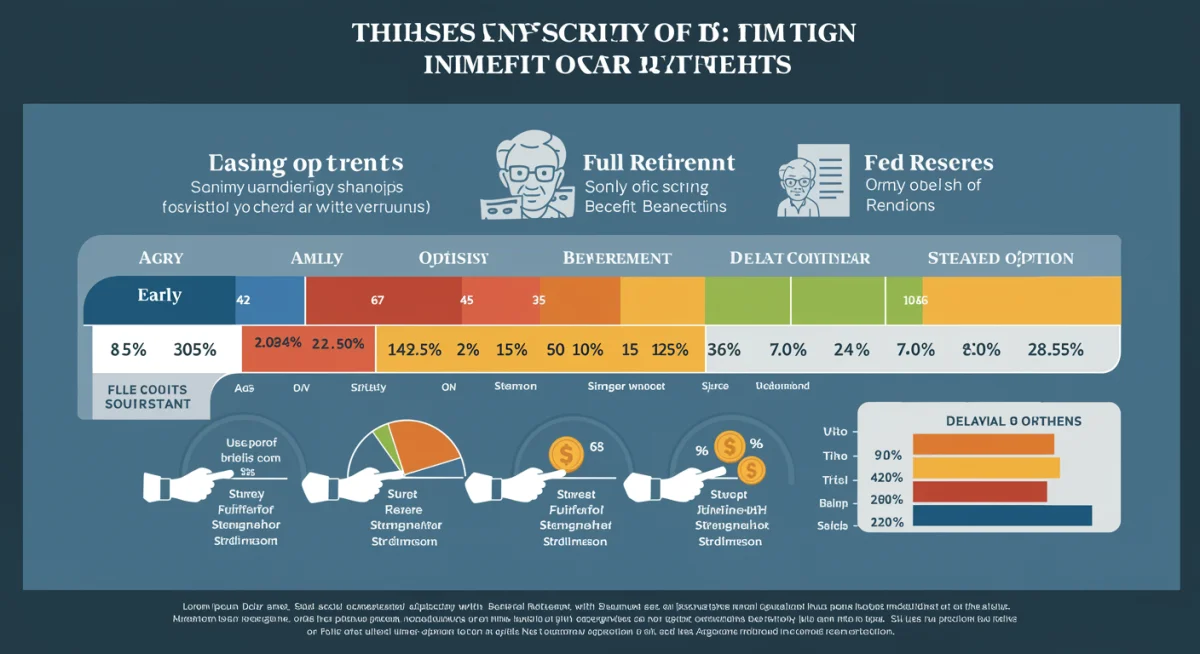
The decision of when to claim your Social Security benefits is one of the most critical financial choices you’ll make in retirement. Your claiming age profoundly affects the amount of your monthly benefit, with significant differences between early, full, and delayed claiming.
While you can start receiving benefits as early as age 62, doing so comes with a permanent reduction in your monthly payment. Conversely, waiting beyond your full retirement age can result in a higher monthly benefit, offering a substantial incentive for those who can afford to delay.
Early Claiming: Weighing the Trade-offs
Claiming benefits at age 62 means you’ll receive payments for a longer period, but each payment will be reduced. For someone with a full retirement age of 67, claiming at 62 results in a permanent reduction of about 30% of your full benefit amount. This option might be suitable for individuals who are in poor health, face unemployment, or have other sufficient income streams.
- Reduced Monthly Payments: Benefits are permanently reduced by a percentage for each month claimed before your FRA.
- Increased Total Lifetime Benefits (Potentially): If you have a shorter life expectancy, starting early might lead to a higher total payout over your lifetime.
- Work Earnings Limit: If you work while receiving early benefits, your benefits might be temporarily reduced if your earnings exceed a certain limit.
Delayed Claiming: The Power of Growth
Delaying your Social Security benefits past your full retirement age, up to age 70, can significantly increase your monthly payment. For each year you delay past your FRA, your benefit increases by approximately 8% through Delayed Retirement Credits (DRCs). These credits can add up, resulting in a substantially larger monthly check for the rest of your life.
This strategy is particularly beneficial for those with a longer life expectancy, strong personal savings, or who continue to work past their FRA. The increased monthly income can provide a powerful hedge against inflation and unexpected expenses in later retirement years.
The decision to claim early, at FRA, or to delay is highly personal and should be based on your individual health, financial situation, other retirement assets, and life expectancy. Consulting a financial advisor can provide valuable insights tailored to your specific circumstances.
Step 3: Optimizing for Spousal and Survivor Benefits
Social Security isn’t just about individual benefits; it also offers crucial provisions for spouses and survivors. Understanding these rules is a vital part of Unlocking Your 2026 Social Security Benefits, as they can significantly enhance a family’s overall financial security, especially in multi-earner households or after the loss of a loved one.
Spousal benefits allow an eligible spouse to receive payments based on their partner’s work record. This is particularly advantageous if one spouse has significantly higher earnings or if one spouse did not work enough years to qualify for their own substantial benefit. Survivor benefits, on the other hand, provide financial support to widows, widowers, and eligible children after a worker’s death.
Spousal Benefit Considerations
To qualify for spousal benefits, you must generally be at least 62 years old, or caring for a child who is under age 16 or disabled. The maximum spousal benefit is 50% of the higher-earning spouse’s Primary Insurance Amount (PIA) at their full retirement age. However, claiming spousal benefits early will also result in a reduction of this amount.
- Coordination with Own Benefits: If you are eligible for both your own Social Security benefit and a spousal benefit, the SSA will pay your own benefit first. If your spousal benefit is higher, you will receive an additional amount to reach the spousal benefit level.
- Divorced Spouses: You may be eligible for benefits on an ex-spouse’s record if the marriage lasted at least 10 years, you are currently unmarried, and you are at least 62.
- “File and Suspend” (Limited): While the “file and suspend” strategy was largely eliminated, specific rules still apply for those who reached FRA before January 2, 2016, allowing some to claim spousal benefits while their own benefit continues to grow.
Survivor Benefits: A Safety Net
Survivor benefits provide crucial financial support to eligible family members after a worker’s death. This can include a widow or widower, divorced widow(er)s, children, and even dependent parents. The amount of the survivor benefit depends on the deceased worker’s earnings, but generally, a surviving spouse can receive up to 100% of the deceased worker’s basic Social Security benefit.
The rules for survivor benefits can be complex, involving age requirements, marital status, and other factors. It’s important for potential beneficiaries to contact the SSA directly to understand their eligibility and the application process. Strategic planning around these benefits can provide a critical financial safety net for families.
Navigating the “My Social Security” Online Account
In today’s digital age, the Social Security Administration (SSA) provides powerful online tools to help individuals manage their benefits. The “my Social Security” account is a personalized, secure portal that offers a wealth of information, making it an indispensable resource for anyone planning for retirement or already receiving benefits.
Creating and regularly checking your online account is a proactive step towards understanding your future financial landscape. It allows you to review your earnings record for accuracy, get personalized benefit estimates, and even manage your current benefits if you are already receiving them. This digital access streamlines many processes that once required phone calls or in-person visits.
What You Can Do with Your Online Account
The “my Social Security” account is more than just a place to view your information; it’s an active management tool. Its features are designed to empower you with control and clarity over your Social Security benefits.
- Review Earnings Record: Crucially, you can check your reported earnings history. Discrepancies can affect your future benefits, so it’s vital to ensure accuracy. Correcting errors early can prevent significant issues later.
- Get Benefit Estimates: Receive personalized estimates for retirement, disability, and survivor benefits based on your actual earnings record. These estimates are invaluable for retirement planning.
- Download Benefit Statement: Access your Social Security Statement, which provides a detailed breakdown of your earnings and estimated benefits. This document is often required for financial planning or loan applications.
- Manage Benefits (if applicable): If you’re already receiving benefits, you can change your address, start or change direct deposit, get a replacement Medicare card, and get a replacement SSA-1099 form for tax purposes.
Regularly accessing your “my Social Security” account ensures that your information is correct and helps you stay informed about any potential changes or updates from the SSA. It’s a fundamental tool for effective benefit management and maximizing your claims.
Understanding Cost-of-Living Adjustments (COLAs) and Future Outlook
Social Security benefits are not static; they are designed to keep pace with inflation through annual Cost-of-Living Adjustments (COLAs). Understanding how COLAs work and their projected impact is essential for long-term retirement planning, as they directly influence the purchasing power of your benefits in 2026 and beyond.
COLAs are determined by the Consumer Price Index for Urban Wage Earners and Clerical Workers (CPI-W) and are typically announced in October of each year, taking effect in January of the following year. These adjustments are critical for maintaining the real value of your benefits against the rising cost of goods and services.
How COLAs are Calculated and Their Importance
The COLA calculation compares the CPI-W from the third quarter of the current year to the third quarter of the previous year. If there’s an increase, benefits are adjusted accordingly. This mechanism is a cornerstone of Social Security’s design, aiming to prevent inflation from eroding retirees’ financial security.
- Inflation Protection: COLAs help ensure that your benefits maintain their buying power over time, protecting you from rising costs of living, especially for essentials like food, housing, and healthcare.
- Future Projections: While COLAs are not guaranteed to be positive every year, they historically have been a regular feature of Social Security. Financial planners often incorporate projected COLA rates into retirement income models.
- Impact on Medicare Premiums: It’s important to note that increases in Medicare Part B premiums are often deducted directly from Social Security benefits. While COLAs increase your benefit, part of that increase might be offset by higher Medicare costs.
Looking ahead to 2026, while specific COLA projections are speculative, general economic conditions and inflation trends will continue to influence these adjustments. Staying informed about economic forecasts and SSA announcements will be key to understanding the potential value of your benefits.
Maximizing Benefits with Additional Strategies
Beyond the core claiming decisions, several other strategies can help you maximize your 2026 Social Security Benefits and overall retirement income. These often involve coordinating Social Security with other financial resources and making smart choices throughout your working life.
It’s not just about when you claim; it’s also about how you integrate Social Security into your broader financial plan. This holistic approach ensures that every component of your retirement portfolio works synergistically to provide the greatest possible security and comfort.
Coordination with Other Retirement Accounts
Social Security should be viewed as one pillar of your retirement income. Coordinating it with 401(k)s, IRAs, and other savings can significantly enhance your financial position. For instance, if you have substantial savings, you might be able to delay Social Security claiming to age 70, allowing your benefits to grow, while drawing from your other accounts in the interim.
- Bridge Income: Use personal savings or other investments to cover living expenses during the years you delay Social Security, allowing your benefits to reach their maximum.
- Tax Planning: Understand how Social Security benefits are taxed. Up to 85% of your benefits may be subject to federal income tax, depending on your ‘combined income’ (adjusted gross income + non-taxable interest + one-half of your Social Security benefits).
- Working in Retirement: If you continue to work, be aware of the earnings limits if you claim benefits before your full retirement age. Exceeding these limits can temporarily reduce your benefits, though they will be recalculated at your FRA.
Professional Guidance and Continuous Education
The rules governing Social Security can be intricate and change periodically. Seeking advice from a qualified financial planner specializing in retirement can provide invaluable, personalized insights. They can help you model different claiming scenarios and integrate your Social Security strategy with your overall financial goals. Furthermore, staying updated on any legislative changes or SSA policy updates is critical for optimal planning.
By combining strategic claiming, understanding all benefit types, and leveraging professional advice, you can confidently navigate the path to maximizing your Social Security benefits in 2026 and securing a comfortable retirement.
| Key Strategy | Brief Description |
|---|---|
| Understand Eligibility | Know your earnings history, AIME, and PIA to project your base benefit amount. |
| Strategic Claiming Age | Choose between early, full, or delayed claiming to optimize monthly payments based on health and finances. |
| Spousal & Survivor Benefits | Leverage benefits based on a spouse’s or ex-spouse’s record, or as a survivor. |
| Utilize “my Social Security” | Regularly check your online account for earnings, estimates, and benefit management. |
Frequently Asked Questions About 2026 Social Security Benefits
The ‘best’ age depends on individual circumstances, including health, financial needs, and life expectancy. Claiming at your full retirement age provides your full benefit, while delaying to 70 offers the maximum monthly payment. Early claiming results in a permanent reduction.
COLAs are annual adjustments to Social Security benefits designed to counteract inflation. They help maintain the purchasing power of your benefits over time, ensuring your income keeps pace with rising costs of living. COLAs are usually announced in October.
Yes, you can work while receiving benefits. However, if you are under your full retirement age, your benefits may be temporarily reduced if your earnings exceed a certain limit. Once you reach your full retirement age, these earning limits no longer apply.
You may be able to claim benefits on an ex-spouse’s record if your marriage lasted at least 10 years, you are currently unmarried, and you are at least 62 years old. Your ex-spouse does not need to have claimed their benefits for you to apply.
The “my Social Security” online account allows you to review your earnings record, get personalized benefit estimates, and manage your current benefits. It’s a crucial tool for financial planning and ensuring the accuracy of your Social Security information.
Conclusion
Successfully maximizing your 2026 Social Security Benefits requires a blend of informed decision-making, strategic planning, and continuous engagement with available resources. By diligently understanding your eligibility, carefully selecting your claiming age, and leveraging spousal or survivor benefits, you can significantly impact your financial well-being in retirement. Utilizing the “my Social Security” online account and staying abreast of COLAs are also integral steps in this process. Ultimately, taking a proactive approach to your Social Security planning ensures that you unlock the full potential of your benefits, providing a more secure and comfortable future.