Space Exploration 2026: NASA’s Lunar Missions & Budget Boost
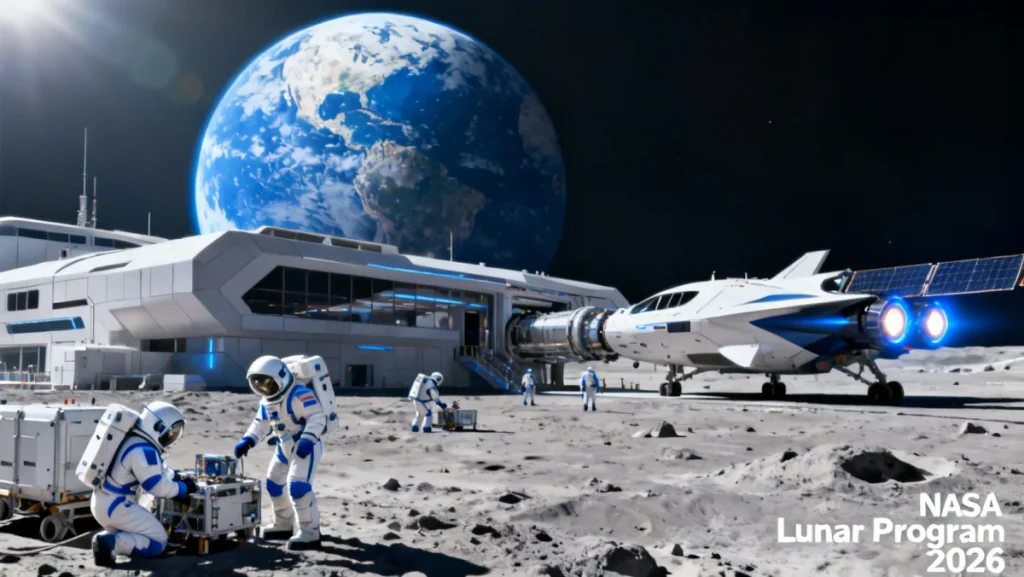
NASA’s 2026 agenda includes significant budget increases and an array of new lunar missions, aiming to establish a sustained human presence on the Moon and pave the way for future deep-space exploration.
The landscape of space exploration is on the cusp of a transformative era, with NASA Lunar Programs 2026 at the forefront of ambitious new missions and substantial budget increases. This year marks a pivotal moment as NASA unveils its detailed strategy to not only return humans to the Moon but to establish a sustained presence, pushing the boundaries of scientific discovery and technological innovation like never before.
The Vision for 2026: A New Era of Lunar Exploration
NASA’s vision for 2026 is clear: to accelerate lunar exploration and set the stage for future human missions to Mars. This involves a multi-faceted approach, integrating advanced technology development, international partnerships, and robust scientific investigations. The commitment extends beyond flags and footprints, aiming for long-term sustainability and resource utilization on the lunar surface.
The agency’s plans underscore a renewed focus on the Moon as a strategic outpost, a stepping stone for deeper space endeavors. This includes not just sending astronauts but also deploying advanced robotics and developing critical infrastructure to support extended stays.
Artemis Program Acceleration
The Artemis program remains the cornerstone of NASA’s lunar ambitions. For 2026, the program sees an accelerated timeline for several key missions, building upon the successes of previous uncrewed and crewed test flights. The primary goal is to ensure a continuous human presence near and on the Moon, fostering a vibrant lunar economy and research ecosystem.
- Artemis III Preparations: Intensive training and mission simulations are underway for the first human landing on the Moon in decades, focusing on precision landing sites in the lunar south pole region.
- Gateway Deployment: Key modules for the Lunar Gateway, a vital outpost orbiting the Moon, are scheduled for deployment, providing critical support for Artemis missions and a research platform.
- Commercial Lunar Payload Services (CLPS): Increased utilization of commercial partners for delivering scientific instruments and technology demonstrations to the lunar surface.
This acceleration is backed by significant investments in both human spaceflight systems and lunar infrastructure, ensuring the necessary resources are in place to meet these challenging objectives. The collaborative efforts with private industry are particularly crucial in driving innovation and efficiency.
In essence, 2026 represents a critical juncture where years of planning and development converge into tangible progress toward a sustainable lunar future. The ambitions are high, but so is the dedication to achieving them, promising a thrilling chapter in human space exploration.
Budgetary Boosts and Economic Impact
The financial commitment to NASA’s lunar programs in 2026 is unprecedented, reflecting a strong governmental and public consensus on the importance of space exploration. The proposed budget increases are substantial, earmarked specifically for accelerating Artemis missions, developing next-generation technologies, and fostering a burgeoning space economy.
These increased allocations are not merely expenditures but strategic investments, expected to yield significant returns in terms of scientific knowledge, technological advancements, and economic growth. The ripple effect of these investments is projected to extend across various sectors, from advanced manufacturing to software development.
Funding Allocation Priorities
NASA’s budget for 2026 prioritizes several key areas to ensure the success and sustainability of its lunar endeavors. This includes significant funds for human landing systems, lunar surface infrastructure, and scientific research payloads. The aim is to create a robust and resilient framework for future operations.
- Human Landing Systems (HLS): A significant portion of the budget is dedicated to the development and testing of advanced HLS vehicles, ensuring safe and efficient transport of astronauts to and from the lunar surface.
- Lunar Surface Infrastructure: Funds are allocated for designing and building habitats, power systems, and communication networks essential for long-duration stays on the Moon.
- Research and Development: Increased investment in cutting-edge research, including in-situ resource utilization (ISRU) for extracting water and other materials from lunar regolith, and advanced propulsion systems.
The economic impact of these budget increases is projected to be substantial. Thousands of jobs are being created across the United States in various industries, stimulating innovation and technological breakthroughs. The development of new materials, advanced robotics, and AI-driven systems for space applications will inevitably find terrestrial applications, benefiting society as a whole.
Moreover, the increased funding fosters a competitive landscape among private companies, driving down costs and accelerating development cycles. This public-private partnership model is crucial for the long-term viability and expansion of space exploration efforts, demonstrating a pragmatic approach to achieving ambitious goals.
Technological Innovations Driving Lunar Success
The ambitious goals of NASA Lunar Programs 2026 are underpinned by a suite of groundbreaking technological innovations. These advancements are critical for overcoming the unique challenges of lunar exploration, from extreme environmental conditions to the logistical complexities of long-duration missions. NASA is investing heavily in areas such as advanced robotics, sustainable power solutions, and cutting-edge life support systems.
These technological leaps are not only essential for mission success but also promise to deliver significant benefits back on Earth. Innovations developed for space often find applications in diverse fields, ranging from medicine to energy, showcasing the broader impact of space research.
Key Areas of Innovation
Several technological frontiers are being pushed to their limits to support NASA’s 2026 lunar objectives. These include advancements in autonomous systems, closed-loop life support, and sophisticated navigation technologies. Each area is vital for ensuring the safety and productivity of astronauts on the Moon.
- Autonomous Robotics: Development of highly intelligent robotic systems for lunar construction, resource prospecting, and equipment maintenance, reducing the need for direct human intervention in hazardous environments.
- Advanced Life Support Systems: Innovations in closed-loop systems that recycle air, water, and waste, significantly reducing the mass of consumables needed for extended lunar stays.
- Next-Generation Power Solutions: Exploration of advanced solar arrays, small modular nuclear reactors, and other robust power sources capable of operating efficiently in the lunar night.
Furthermore, significant progress is being made in 3D printing technologies adapted for the lunar environment. This allows for on-demand manufacturing of tools, spare parts, and even structural components using lunar regolith, drastically reducing reliance on Earth-based supply chains. Such capabilities are transformative for establishing self-sufficient lunar outposts.
The integration of artificial intelligence and machine learning is also playing a crucial role, enhancing mission planning, real-time decision-making, and data analysis. These intelligent systems enable more efficient resource management and provide predictive maintenance capabilities for complex equipment, ensuring mission continuity.
Ultimately, the success of NASA’s 2026 lunar missions hinges on the continuous development and deployment of these advanced technologies. They are the enablers that transform ambitious visions into achievable realities, paving the way for a permanent human presence beyond Earth.
International Collaboration and Partnerships
International collaboration is a cornerstone of NASA’s approach to NASA Lunar Programs 2026, recognizing that the scale and complexity of lunar exploration demand global cooperation. By partnering with other space agencies and private entities worldwide, NASA aims to leverage diverse expertise, share resources, and distribute the financial burden, making ambitious projects more feasible and sustainable.
These partnerships extend beyond mere resource sharing; they foster a spirit of unity and shared scientific endeavor, promoting peaceful uses of outer space and contributing to a global scientific community. The Moon, in this context, becomes a common ground for humanity’s collective aspirations.
Key International Partners
NASA is actively engaging with a broad spectrum of international partners, including traditional allies and emerging space powers. These collaborations are structured around specific mission objectives, technological contributions, and scientific data sharing agreements.
- European Space Agency (ESA): Continued collaboration on the Gateway project, providing key habitation and refueling modules, and contributing to future lunar lander development.
- Japan Aerospace Exploration Agency (JAXA): Partnership on cargo transport to the Gateway and development of advanced robotic technologies for lunar surface operations.
- Canadian Space Agency (CSA): Contribution of robotic arms and other critical systems for the Gateway, enhancing its operational capabilities and scientific utility.
Beyond government agencies, NASA is also expanding its collaborations with private companies globally. These commercial partnerships bring innovative solutions, accelerate technology development, and help to establish a robust lunar economy. Companies are contributing to everything from lunar lander development to resource extraction technologies.
The legal and policy frameworks for these international collaborations are also evolving, ensuring fair and equitable access to lunar resources and establishing norms for responsible behavior in space. Treaties and agreements are being updated to reflect the new realities of lunar exploration and the increasing number of actors involved.
This collaborative model not only enhances the technical capabilities of lunar missions but also strengthens diplomatic ties and promotes a shared vision for humanity’s future in space. It’s a testament to the idea that the greatest challenges are best met through collective effort.
Scientific Discoveries on the Horizon
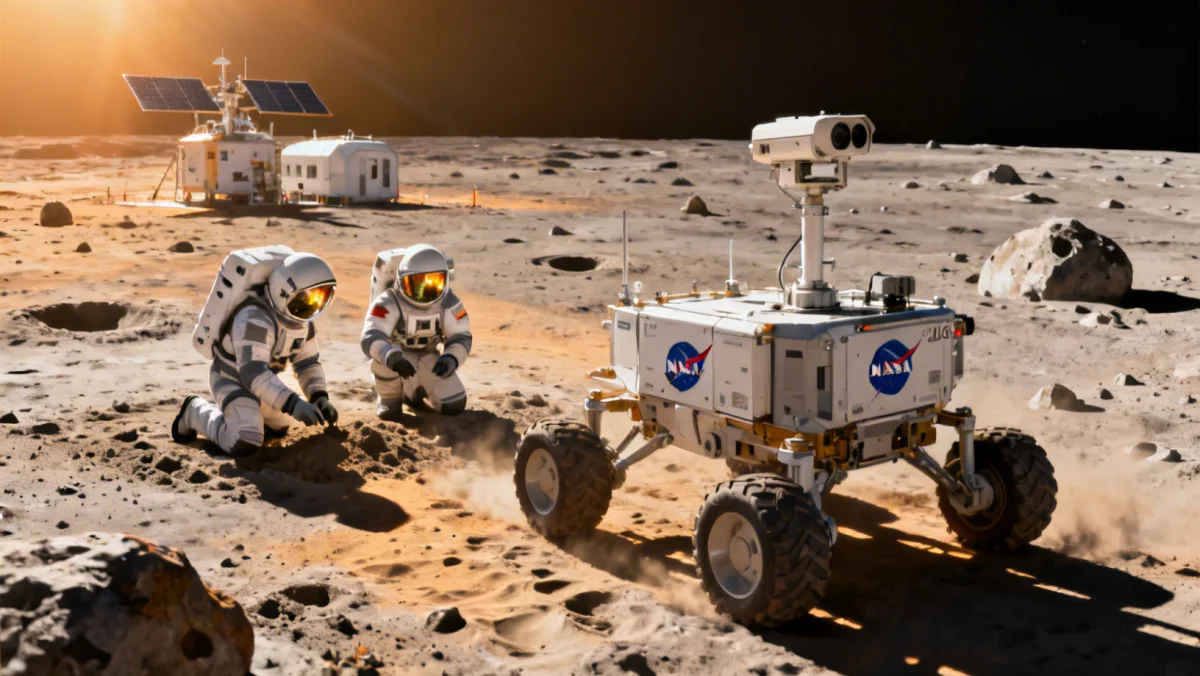
The scientific return from NASA Lunar Programs 2026 is anticipated to be immense, promising to revolutionize our understanding of the Moon, the early solar system, and even the origins of life. The focus on the lunar south pole, with its potential for water ice, opens up unprecedented opportunities for scientific discovery and resource utilization.
Beyond water ice, missions will investigate lunar geology, seismology, and the effects of the space environment on matter. These investigations will provide critical data for future deep-space missions and offer insights into planetary evolution.
Key Scientific Objectives
NASA’s scientific agenda for 2026 is ambitious, targeting several fundamental questions about the Moon and its environment. These objectives guide the selection of landing sites, the design of scientific instruments, and the training of astronauts.
- Water Ice Analysis: Direct sampling and analysis of water ice in permanently shadowed regions to understand its origin, distribution, and potential for use as propellant and life support.
- Lunar Geology and Composition: Detailed geological surveys and drilling operations to unearth the Moon’s subsurface composition, providing clues about its formation and evolution.
- Space Weathering Effects: Studying the long-term effects of solar wind and cosmic rays on lunar surface materials, which can inform planetary protection strategies and material science.
The deployment of advanced scientific instruments, including sophisticated spectrometers, seismometers, and drills, will enable unprecedented data collection. Astronauts will play a crucial role in conducting field geology, deploying experiments, and collecting unique samples for return to Earth. These samples will undergo rigorous analysis in laboratories worldwide, unlocking new secrets of our celestial neighbor.
Moreover, the establishment of a lunar observatory is a long-term goal, leveraging the Moon’s stable environment and lack of atmosphere for unparalleled astronomical observations. Such an observatory could provide clearer views of the universe than any Earth-based telescope, offering new perspectives on distant galaxies and exoplanets.
The scientific endeavors planned for 2026 are not just about answering existing questions but also about discovering new ones, pushing the frontiers of human knowledge and inspiring the next generation of scientists and explorers.
Challenges and Future Outlook
Despite the optimism surrounding NASA Lunar Programs 2026, significant challenges remain. These include the inherent risks of space travel, the complexities of developing cutting-edge technology, and the need for sustained political and financial support. Addressing these hurdles will require continuous innovation, robust risk management, and adaptive planning.
However, the future outlook remains overwhelmingly positive. The strategic investments, international collaborations, and technological advancements are laying a solid foundation for a sustainable and expansive human presence in space, far beyond 2026.
Overcoming Obstacles
NASA is implementing comprehensive strategies to mitigate the various challenges associated with its lunar ambitions. These include rigorous testing regimes, redundancy in critical systems, and a flexible approach to mission planning.
- Technical Complexities: Continuous research and development to address unforeseen technical issues, focusing on modularity and adaptability in system design.
- Funding Stability: Advocating for long-term budget commitments to ensure continuity in mission development and prevent costly delays.
- Human Factors: Extensive training and psychological support for astronauts, preparing them for the physical and mental demands of long-duration lunar missions.
Looking beyond 2026, the success of these lunar missions will directly inform and enable future human expeditions to Mars. The Moon serves as a proving ground for technologies, operational procedures, and human endurance in deep space. Lessons learned on the Moon will be invaluable for the even greater challenges of interplanetary travel.
The establishment of a permanent human presence on the Moon will also open up new avenues for commercial exploitation of lunar resources, creating a new economic frontier. This could include mining for rare elements, manufacturing in microgravity, and space tourism, transforming the global economy in unforeseen ways.
The journey ahead is undoubtedly challenging, but the potential rewards—scientific discovery, technological advancement, and the expansion of human civilization—are immeasurable. NASA’s 2026 plans represent a bold step forward in this grand human endeavor, promising a future where space exploration is not just an aspiration but a sustained reality.
| Key Point | Brief Description |
|---|---|
| Artemis Program Boost | Accelerated missions and preparations for human landings, focusing on a sustained lunar presence. |
| Increased Budget | Substantial financial allocations to drive lunar exploration, technology, and economic growth. |
| Technological Innovations | Focus on advanced robotics, life support, and power systems crucial for lunar success. |
| Global Collaboration | Strong international partnerships and commercial engagements to share expertise and resources. |
Frequently Asked Questions About NASA’s 2026 Lunar Plans
NASA’s primary goals for 2026 include accelerating the Artemis program to establish a sustained human presence on the Moon, developing key lunar infrastructure, and conducting extensive scientific research, especially at the lunar south pole. These efforts are designed to prepare for future human missions to Mars.
The increased budget will significantly accelerate the development of human landing systems, lunar habitats, and advanced propulsion technologies. It will also foster greater involvement from commercial partners, stimulate job growth, and drive technological innovation across various sectors, both in space and on Earth.
Crucial new technologies include advanced autonomous robotics for construction and resource extraction, closed-loop life support systems for long-duration stays, and next-generation power solutions like small modular nuclear reactors. These innovations are vital for sustainability and operational efficiency on the Moon.
International partners like ESA, JAXA, and CSA are critical to NASA’s 2026 plans, contributing modules for the Lunar Gateway, robotic systems, and scientific instruments. These collaborations share expertise, resources, and costs, fostering a global effort towards peaceful and sustainable space exploration.
Expected scientific discoveries include detailed analysis of water ice at the lunar south pole, in-depth studies of lunar geology and composition, and observations of space weathering effects. These findings will enhance our understanding of the Moon’s formation, evolution, and potential as a resource hub.
Conclusion
The year 2026 marks a defining period for space exploration, with NASA at the forefront of an ambitious expansion into lunar territory. The significant budget increases and the unveiling of new, bold missions under the Artemis program underscore a profound commitment to establishing a sustained human presence on the Moon. These endeavors are not merely about returning to a familiar celestial body; they are about building a foundation for future exploration of Mars and beyond, driven by technological innovation, robust international partnerships, and an insatiable quest for scientific discovery. The challenges are formidable, yet the collective human spirit to explore and innovate promises to transform these visions into reality, ushering in an unprecedented era of cosmic achievement and expanding the horizons of human endeavor.