NHTSA’s 4 New Vehicle Safety Regulations for July 2025
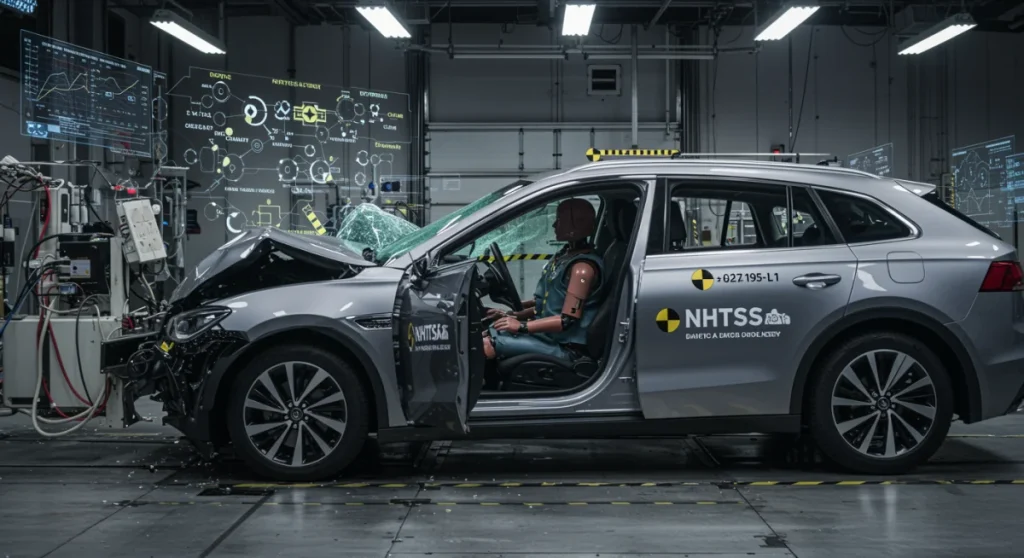
Transportation Safety: NHTSA Implements 4 New Regulations for Vehicle Standards Starting July 2025 will significantly enhance road safety by introducing stricter requirements for advanced driver-assistance systems, pedestrian protection, event data recorders, and cybersecurity measures in all new vehicles.
The landscape of automotive safety is on the cusp of a significant transformation. Starting July 2025, the National Highway Traffic Safety Administration (NHTSA) is rolling out four pivotal new regulations designed to elevate vehicle standards and dramatically enhance transportation safety: NHTSA implements 4 new regulations for vehicle standards starting July 2025. This proactive approach aims to mitigate risks, reduce traffic fatalities, and safeguard both occupants and pedestrians.
The imperative for enhanced vehicle safety
Road safety remains a critical concern across the United States. Despite advancements in vehicle technology, accidents continue to result in thousands of fatalities and millions of injuries annually. This persistent challenge underscores the urgent need for stricter regulations and continuous innovation in automotive safety. The new NHTSA regulations are a direct response to these statistics, aiming to create a safer driving environment for everyone.
These upcoming standards are not merely incremental adjustments; they represent a comprehensive reevaluation of what constitutes a safe vehicle in the modern era. As technology evolves, so too must the regulatory framework that governs its implementation in our cars. The focus is on preventing accidents before they happen, protecting vulnerable road users, and ensuring vehicles are equipped with the most advanced safety features available.
Understanding the current safety landscape
Currently, vehicle safety is a complex interplay of passive and active systems. Passive systems, like airbags and seatbelts, protect occupants during a crash. Active systems, such as anti-lock brakes and electronic stability control, help drivers avoid collisions. While effective, the rise of advanced driver-assistance systems (ADAS) presents an opportunity to move beyond reactive safety to truly proactive accident prevention.
- Fatalities on the rise: Recent years have seen concerning trends in traffic fatalities, highlighting the limitations of existing standards.
- Technological potential: Modern technology offers unprecedented capabilities for preventing crashes and reducing their severity.
- Global alignment: Many other developed nations have already adopted more stringent safety standards, prompting the U.S. to catch up.
The current regulatory framework, while robust for its time, needs an update to address the challenges posed by increasingly complex vehicles and the diverse demands of modern road usage. The introduction of these four new regulations is a testament to NHTSA’s commitment to staying ahead of the curve and ensuring American roads are among the safest in the world.
Regulation 1: Advanced driver-assistance systems (ADAS) mandate
One of the most impactful new regulations centers on mandating advanced driver-assistance systems (ADAS) in all new vehicles. This move acknowledges the proven efficacy of technologies like automatic emergency braking (AEB), lane-keeping assist (LKA), and blind-spot detection (BSD) in preventing collisions. By making these features standard, NHTSA aims to significantly reduce the human error factor in crashes.
The implementation of ADAS as a mandatory feature marks a pivotal shift from optional enhancements to essential safety components. This regulation will ensure that every new car sold in the U.S. is equipped with a suite of technologies designed to actively assist drivers, mitigate risks, and enhance overall situational awareness on the road. The goal is to move towards a future where vehicles are inherently more capable of preventing accidents.
Key ADAS technologies to become standard
The specific ADAS features that will be mandated under this regulation are carefully selected based on their proven effectiveness in real-world scenarios. Automatic emergency braking, for instance, has been shown to significantly reduce rear-end collisions, while lane-keeping assist helps prevent unintentional lane departures.
- Automatic emergency braking (AEB): Detects potential collisions and applies brakes if the driver doesn’t react.
- Lane-keeping assist (LKA): Helps drivers stay within their lane through steering adjustments or warnings.
- Blind-spot detection (BSD): Alerts drivers to vehicles in their blind spots, reducing lane-change accidents.
- Rear automatic braking (RAB): Prevents collisions when backing up by detecting objects and applying brakes.
These systems work in concert to provide a comprehensive safety net, reducing the likelihood of common accident types. While some drivers may initially find these systems intrusive, their life-saving potential far outweighs any minor adjustments in driving habits. The regulation also sets performance standards to ensure these systems function reliably and effectively across various driving conditions.
Regulation 2: Enhanced pedestrian protection systems
Pedestrian safety has become an increasingly urgent concern, especially in urban environments. The second new regulation addresses this by mandating enhanced pedestrian protection systems in all new vehicles. This includes technologies designed to detect pedestrians and cyclists, warn drivers, and, if necessary, automatically apply brakes to prevent or mitigate impacts.
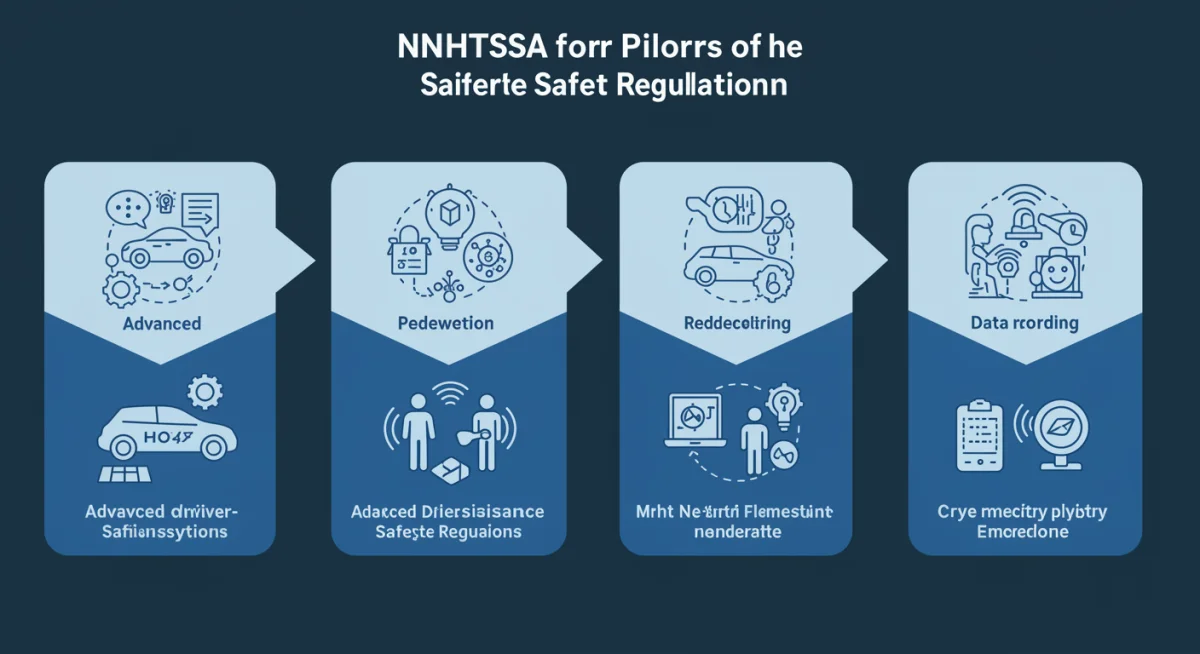
This regulation acknowledges the vulnerability of pedestrians and cyclists, who often bear the brunt of vehicle collisions. By making these protective systems standard, NHTSA aims to create a more harmonious and safer coexistence between vehicles and other road users. It’s a crucial step towards building safer communities and reducing the tragic toll of pedestrian fatalities.
Technologies for pedestrian and cyclist safety
The mandated systems go beyond simple warning alerts. They integrate sophisticated sensors and algorithms to identify vulnerable road users in various conditions, including low light and adverse weather. This proactive approach is essential for preventing incidents that often result in severe injuries or fatalities.
- Pedestrian automatic emergency braking (PAEB): Specifically designed to detect pedestrians and initiate braking.
- Cyclist detection: Extends PAEB capabilities to recognize and react to cyclists.
- Improved visibility: Requirements for vehicle design that enhance driver visibility of surrounding areas.
These technologies are critical for protecting those outside the vehicle, fostering a safer environment for walking and cycling. The regulation will also likely spur further innovation in sensor technology and AI algorithms to improve the accuracy and reliability of these systems, ensuring they perform optimally in diverse real-world scenarios.
Regulation 3: Standardized event data recorders (EDRs)
Understanding the circumstances leading to a crash is vital for improving future vehicle safety. The third new regulation mandates standardized event data recorders (EDRs), often referred to as “black boxes,” in all new vehicles. These devices will record critical data points immediately before, during, and after a collision, providing invaluable information for accident reconstruction and safety research.
While EDRs have been present in many vehicles for years, this regulation standardizes their capabilities, data parameters, and accessibility. This consistency is crucial for researchers and investigators to accurately piece together accident events, identify contributing factors, and ultimately inform future safety improvements. It’s about learning from every incident to prevent recurrence.
What data will EDRs record?
The standardized EDRs will capture a wide array of data points, offering a comprehensive snapshot of vehicle performance and driver inputs leading up to a crash. This information is anonymized and used for safety analysis, not individual prosecution, though it can be subpoenaed in legal cases.
- Vehicle speed: How fast the vehicle was traveling.
- Brake application: Whether the brakes were applied and how forcefully.
- Seatbelt usage: Status of seatbelts for occupants.
- Airbag deployment: Information on airbag activation.
- Engine RPM and throttle position: Insights into engine performance and driver input.
The standardization of EDRs will significantly enhance the quality and comparability of crash data. This wealth of information will be instrumental in identifying emerging safety issues, evaluating the effectiveness of new vehicle technologies, and developing more targeted safety regulations in the future. It represents a commitment to data-driven safety improvements.
Regulation 4: Enhanced vehicle cybersecurity standards
As vehicles become more connected and technologically advanced, the risk of cyber threats grows. The fourth new regulation addresses this by implementing enhanced vehicle cybersecurity standards. This mandate requires manufacturers to incorporate robust cybersecurity measures into vehicle design and software, protecting against unauthorized access, data breaches, and malicious control.
The increasing reliance on software and connectivity in modern vehicles makes them potential targets for cyberattacks. A compromised vehicle could not only lead to privacy breaches but also pose direct safety risks if critical systems are affected. This regulation is a preemptive strike, ensuring that cybersecurity is an integral part of vehicle development from the ground up, not an afterthought.
Protecting connected vehicles from cyber threats
The new cybersecurity standards will cover various aspects of vehicle architecture, from in-car communication networks to external connectivity points. Manufacturers will be required to implement security-by-design principles, conduct regular vulnerability assessments, and establish processes for rapid response to discovered threats.
- Secure software development: Mandating secure coding practices and software updates.
- Network segmentation: Isolating critical vehicle systems from less secure infotainment systems.
- Authentication protocols: Stronger measures to prevent unauthorized access to vehicle controls.
- Over-the-air (OTA) update security: Ensuring secure delivery and installation of software updates.
These measures are vital for maintaining the integrity and safety of connected vehicles in an increasingly digital world. By establishing a baseline for cybersecurity, NHTSA aims to build consumer confidence in advanced vehicle technologies and prevent potential catastrophic failures due to cyber vulnerabilities. This regulation is forward-looking, anticipating future threats and building resilience into the automotive ecosystem.
Industry impact and consumer benefits
The implementation of these four new NHTSA regulations will have far-reaching implications for both the automotive industry and consumers. Manufacturers will face significant challenges in redesigning and re-engineering vehicles to meet the new standards, requiring substantial investment in research, development, and production processes. However, these challenges are ultimately overshadowed by the profound benefits to public safety.
For consumers, these regulations translate directly into safer vehicles, reduced accident risks, and potentially lower insurance premiums over time. The peace of mind that comes with knowing your vehicle is equipped with the latest safety technology is invaluable. Moreover, a safer driving environment benefits everyone, from drivers and passengers to pedestrians and cyclists, contributing to a healthier and more secure society.
Challenges for manufacturers
Automakers will need to adapt quickly to these new mandates. This involves not only integrating new hardware and software but also establishing rigorous testing and validation protocols to ensure compliance. The timeline for implementation, with a July 2025 effective date, means that design cycles for future models are already being influenced by these requirements.
- Retrofitting existing platforms: Significant engineering effort to incorporate new systems into current vehicle architectures.
- Cost implications: Increased production costs may be passed on to consumers, at least initially.
- Supply chain adjustments: Sourcing and integrating new components from specialized suppliers.
- Software integration: Ensuring seamless operation of complex ADAS and cybersecurity systems.
Despite these hurdles, the industry has a strong track record of adapting to new safety standards, often leading to innovation and competitive advantages. The regulations will likely spur a new wave of advancements in automotive safety technology, benefiting consumers in the long run.
Benefits for drivers and the public
The primary beneficiaries of these regulations are the American public. Safer roads mean fewer accidents, fewer injuries, and fewer fatalities. The ripple effects extend to healthcare systems, emergency services, and the overall economic burden associated with traffic incidents.
- Reduced accident rates: ADAS and pedestrian protection systems will actively prevent collisions.
- Lower injury severity: Even when accidents occur, advanced systems can mitigate impact forces.
- Improved peace of mind: Drivers can feel more secure knowing their vehicles have cutting-edge safety features.
- Data-driven improvements: EDR data will inform future safety strategies and vehicle designs.
Ultimately, these regulations represent a significant step forward in the ongoing quest for zero traffic fatalities. By leveraging technology and data, NHTSA is paving the way for a future where roads are safer for everyone, making transportation not just efficient, but inherently secure.
| Key Regulation | Primary Impact |
|---|---|
| ADAS Mandate | Mandates Automatic Emergency Braking, Lane-Keeping Assist, and Blind-Spot Detection to prevent collisions. |
| Pedestrian Protection | Requires systems to detect and protect pedestrians and cyclists, reducing vulnerable road user fatalities. |
| Standardized EDRs | Standardizes Event Data Recorders for consistent crash data collection, aiding accident reconstruction and safety research. |
| Enhanced Cybersecurity | Requires robust cybersecurity measures to protect connected vehicles from unauthorized access and cyber threats. |
Frequently asked questions about new NHTSA regulations
The four new NHTSA regulations for vehicle safety standards are scheduled to take effect starting July 2025. This allows manufacturers sufficient time to integrate the required technologies and comply with the new mandates across their vehicle lineups.
Key Advanced Driver-Assistance Systems (ADAS) mandated include Automatic Emergency Braking (AEB), Lane-Keeping Assist (LKA), and Blind-Spot Detection (BSD). These features are proven to significantly reduce common types of road accidents and enhance overall driver safety.
Enhanced pedestrian protection systems will utilize advanced sensors and algorithms to detect pedestrians and cyclists. They will provide warnings to drivers and, if necessary, automatically apply brakes to prevent or mitigate collisions with vulnerable road users, especially in urban areas.
Standardized EDRs will record critical data points such as vehicle speed, brake application, seatbelt usage, and airbag deployment information immediately before, during, and after a crash. This data is vital for accident reconstruction and improving future vehicle safety.
As vehicles become more connected, cybersecurity standards are crucial to protect against unauthorized access, data breaches, and malicious control. These regulations ensure robust measures are in place to safeguard vehicle systems and maintain the safety and integrity of connected cars.
Conclusion
The four new regulations introduced by NHTSA, effective July 2025, represent a monumental stride forward in automotive safety. By mandating advanced driver-assistance systems, enhancing pedestrian protection, standardizing event data recorders, and bolstering cybersecurity, the agency is setting a new benchmark for vehicle standards. These changes will undoubtedly challenge manufacturers but promise a future with significantly safer roads, fewer accidents, and a reduced toll of injuries and fatalities for all Americans. This proactive approach to transportation safety: NHTSA implements 4 new regulations for vehicle standards starting July 2025 is a testament to the ongoing commitment to protecting lives and fostering a more secure driving environment.